Best Value
from$99/mo
SemaglutideRx
GLP-1 Receptor Agonist
SemaglutideRx
GLP-1 Receptor Agonist
TirzepatideRx
Dual GLP-1 + GIP Receptor Agonist

Semaglutide ODT PillsRx
GLP-1 Receptor Agonist - Oral Dissolving Tablet
Tirzepatide ODT PillsRx
Dual GLP-1 + GIP Receptor Agonist - Oral Dissolving Tablet

Men's Complete Hair Growth PillRx
Minoxidil, Finasteride, Biotin
Men's Advanced Hair SprayRx
Minoxidil, Finasteride, Fluocinolone, Tretinoin
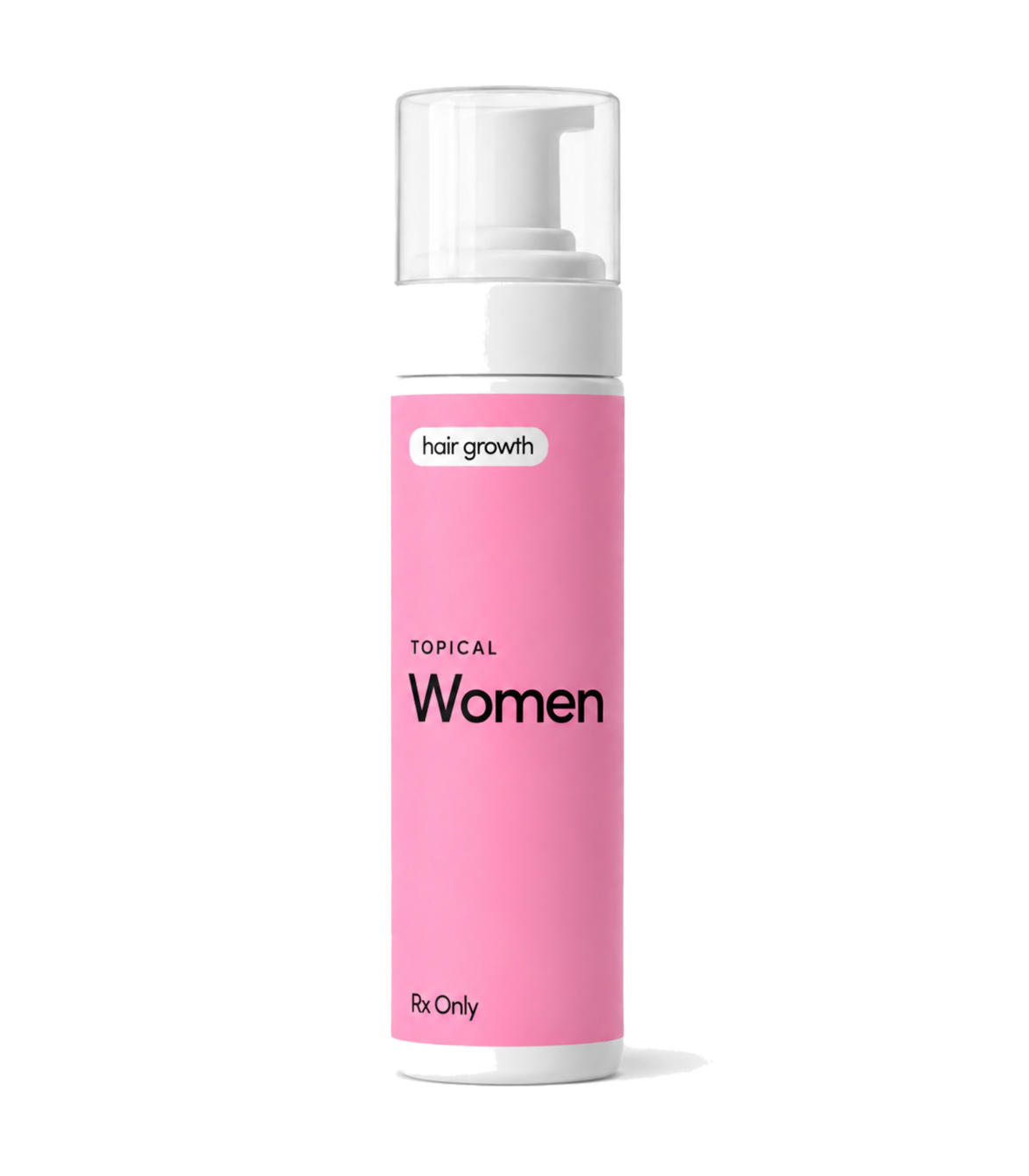
Women's Premium Hair SprayRx
Minoxidil, Tretinoin, Fluocinolone, Biotin, Melatonin

Women's Complete Hair Growth PillRx
Minoxidil, Vitamin E, Biotin
Written by Luma Meds Team
July 14, 2026 · 12 min read

If both treatments are called semaglutide, why can one cost hundreds — or even thousands — more than the other?
That's one of the most common questions patients have when exploring GLP-1 treatment.
You may see familiar brand names like:
And then somewhere else, you may see:
They sound similar. But they're not the same type of medication product.
The biggest difference comes down to how they're made, regulated, prescribed, and dispensed.
Let's make it simple.
Brand-name semaglutide refers to medications manufactured under FDA-approved drug applications.
In the United States, FDA-approved semaglutide products include:
These aren't interchangeable simply because they contain semaglutide. They have different approved uses, doses, and formulations.
For example:
The important part is:
FDA has reviewed these specific finished products before approval.
That review includes evidence related to safety, effectiveness, manufacturing, quality, labeling, and dosing for their approved uses.
Compounded semaglutide is prepared by a pharmacy or other permitted compounder under applicable compounding laws.
The purpose of compounding is generally to create a medication for a patient whose medical needs may not be met by an available commercially manufactured product.
That could involve things such as:
But here's the key distinction:
Compounded semaglutide is not FDA approved.
The FDA does not review each compounded drug for safety, effectiveness, or quality before it reaches patients.
That doesn't mean compounding has no role in healthcare. It means compounded medication follows a different regulatory pathway from an FDA-approved commercial drug.
Imagine two approaches.
Brand-name semaglutide:
Compounded semaglutide:
Same general medication conversation. Different product and different regulatory pathway.
No.
This is probably the most important misconception to clear up.
A true generic drug is FDA approved. It must meet FDA requirements demonstrating that it provides the same clinical benefit and risks as its brand-name counterpart.
Compounded semaglutide does not go through that generic-drug approval process. So phrases like:
are misleading ways to describe a compounded product.
In 2026, the FDA specifically warned telehealth companies against marketing compounded GLP-1 products in ways that imply they're the same as FDA-approved medications.
Pro Tip
Pro Tip
If a provider offers compounded semaglutide, transparency is a good sign. They should clearly tell you: “This medication is compounded and is not FDA approved.”
You shouldn't have to dig through fine print to discover that.
This is where the conversation becomes more nuanced.
Compounded medications can serve an important role when a patient's medical needs can't be met by an available FDA-approved product. The FDA itself recognizes that compounding can serve important patient needs.
For example, depending on the circumstances and applicable law, a prescriber may determine that an individual patient needs a clinically significant change to an available product.
Historically, compounding also played a major role while GLP-1 medications were listed on the FDA drug shortage list.
But the rules have changed as supplies stabilized.
In April 2026, the FDA clarified that under section 503A, pharmacies generally cannot regularly compound products that are essentially copies of commercially available drugs unless applicable conditions are met, including situations where a prescriber documents a change that produces a significant difference for an individual patient.
That's important.
Compounded semaglutide isn't simply supposed to exist as “the cheaper copy of Wegovy.” Compounding has its own legal purpose and requirements.
| Brand-Name Semaglutide | Compounded Semaglutide | |
|---|---|---|
| FDA approved finished product | Yes | No |
| Standard commercial formulation | Yes | Not necessarily |
| FDA premarket review | Yes | No |
| Prescription required | Yes | Yes |
| Commercially manufactured | Yes | No |
| Prepared by a compounding pharmacy/facility | No | Yes |
| Can potentially address an individual patient need | Limited to approved commercial options | Yes, when legally and medically appropriate |
| Considered a generic | No — the brand product itself | No |
| May vary by pharmacy/formulation | Generally standardized | Yes |
Medical Weight Loss
Complete a short online health intake. A licensed healthcare provider reviews your information and clearly identifies whether your treatment plan involves an FDA-approved product or a compounded medication — with transparent dosing instructions.
Start your online visitThis question requires a little care.
Semaglutide itself is a GLP-1 receptor agonist.
But you shouldn't assume every compounded semaglutide product is identical to an FDA-approved commercial product in:
The FDA has specifically said compounded semaglutide products may differ from approved products in ways that can contribute to medication errors — for example, they may be dispensed in multi-dose vials or syringes with varying concentrations.
That's why the pharmacy and treatment instructions matter.
“Compounded semaglutide” is not one single standardized product.
This confuses a lot of patients.
A brand-name pen may give you a predetermined dose.
A compounded medication may come in:
And instructions may involve measuring medication in milliliters or syringe units.
That's where mistakes can happen.
FDA has reported cases where patients accidentally administered multiple times their intended compounded semaglutide dose because of confusion around concentration and syringe measurements.
So if you're receiving compounded semaglutide, you should know exactly:
You should never be guessing.
Did You Know?
Did You Know?
Two vials of compounded semaglutide can contain the same total milligrams but require completely different syringe measurements if the concentrations are different.
That's why copying somebody else's dose in “units” can be dangerous. Your syringe measurement should come from your own prescription — not another patient's TikTok, Reddit post, or medication label.
This is another distinction worth knowing.
The FDA has warned that some compounded products have used salt forms including:
These are different active ingredients from the form used in FDA-approved semaglutide drugs.
The FDA says it does not have information showing that these salt forms have the same chemical and pharmacologic properties and has stated it is not aware of a lawful basis for their use in compounding under applicable federal conditions.
You don't need to memorize the chemistry. Just remember:
The exact form of semaglutide matters.
A reputable provider and pharmacy should know exactly what they're prescribing and dispensing.
Brand-name medications have an important advantage:
The finished product has undergone FDA review.
Its manufacturing specifications, approved dosing, labeling, safety data, and clinical evidence have been evaluated as part of the approval process.
Compounded drugs don't receive that same premarket review.
Because of that, the FDA states compounded drugs generally pose greater risk than FDA-approved products and recommends approved medications when available and appropriate.
That doesn't mean “every compounded medication is unsafe.” It means there is less FDA-level assurance about the finished compounded product.
That's why appropriate prescribing and pharmacy sourcing become even more important.
This is one of the main reasons patients become interested in it.
Brand-name GLP-1 medications are commercially manufactured pharmaceutical products, and their pricing can be substantial — especially when insurance doesn't cover the medication.
Compounded medications operate through a different supply and dispensing structure. That can sometimes result in lower patient pricing.
But price shouldn't be the only question. Instead of asking “What's the cheapest semaglutide I can find?”, ask:
Because saving money isn't helpful if you don't know what you're receiving or how to use it safely.
Some compounded formulations combine semaglutide with another ingredient, such as vitamin B12. You may see these promoted as offering additional benefits.
But there's an important regulatory point.
In April 2026, FDA clarified that simply adding another ingredient such as B12 does not necessarily make a compounded semaglutide product legally distinct from a commercially available product.
Depending on the formulation, FDA may still consider it an essential copy unless the applicable requirements are met, including documentation that the change creates a significant difference for the identified patient.
So: “It has B12 added” doesn't automatically make compounding appropriate. The clinical reason for the compounded formulation matters.
There's no single answer for everyone.
Brand-name semaglutide may make more sense when:
A compounded medication may be considered when:
The key is that the choice shouldn't simply come down to “brand = expensive, compounded = cheap.” It's a medical decision.
Whether you're receiving an FDA-approved product or a compounded medication, you shouldn't have to guess what you're getting.
A transparent provider should clearly explain:
| What You Should Know | Why It Matters |
|---|---|
| Is my medication FDA approved or compounded? | They are different regulatory categories |
| Who is dispensing my medication? | Pharmacy sourcing matters |
| What exactly is prescribed? | Formulation and concentration can differ |
| How do I measure my dose? | Helps prevent dosing mistakes |
| Why is a compounded option appropriate for me? | Compounding should address a legitimate patient need |
| Who do I contact with questions? | Treatment requires ongoing support |
Transparency should be part of the treatment — not something you have to investigate yourself.
At Luma Meds, we believe patients should know exactly what type of medication they're being prescribed.
Treatment begins with a medical intake and review by a licensed healthcare provider.
When a medication is prescribed, the treatment plan should clearly identify whether the medication is an FDA-approved commercial product or a compounded medication.
When compounded treatment is medically and legally appropriate, it should be clearly disclosed as compounded and not FDA approved, with fulfillment through a qualified U.S.-based compounding pharmacy.
Patients should also receive clear instructions about their prescribed dose and how to administer it.
Because affordable care and transparent care shouldn't have to be opposites.
Brand-name semaglutide and compounded semaglutide are related — but they are not interchangeable categories.
Brand-name semaglutide is a standardized commercial medication that has gone through FDA review and approval for specific uses.
Compounded semaglutide is prepared under a separate compounding framework for appropriate patient needs and does not undergo FDA approval as a finished product.
Compounded semaglutide isn't “generic Ozempic.” And it shouldn't be presented as though it's identical to Wegovy or another FDA-approved medication.
But compounded medications can still serve an important role for certain patients when they're prescribed and prepared appropriately.
So rather than asking “Which one is the real semaglutide?”, a better question is: “Which treatment is medically appropriate for me — and do I understand exactly what I'm receiving?”
That's the kind of question good telehealth care should help you answer.
This article is for educational purposes only and is not intended to provide medical advice, diagnosis, or treatment. Individual treatment decisions should be made with a licensed healthcare provider.
Share this article