Best Value
from$99/mo
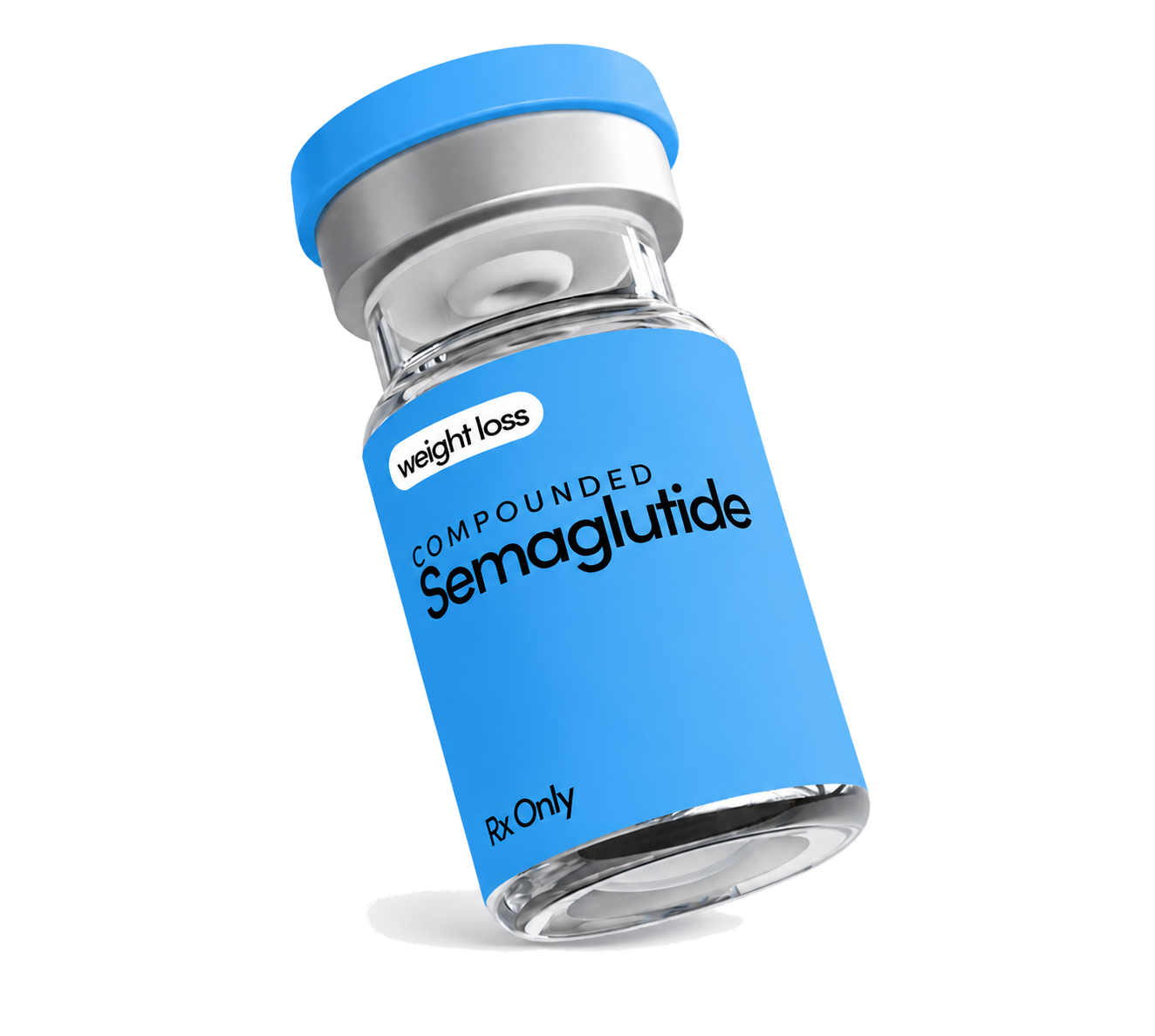
SemaglutideRx
GLP-1 Receptor Agonist
SemaglutideRx
GLP-1 Receptor Agonist
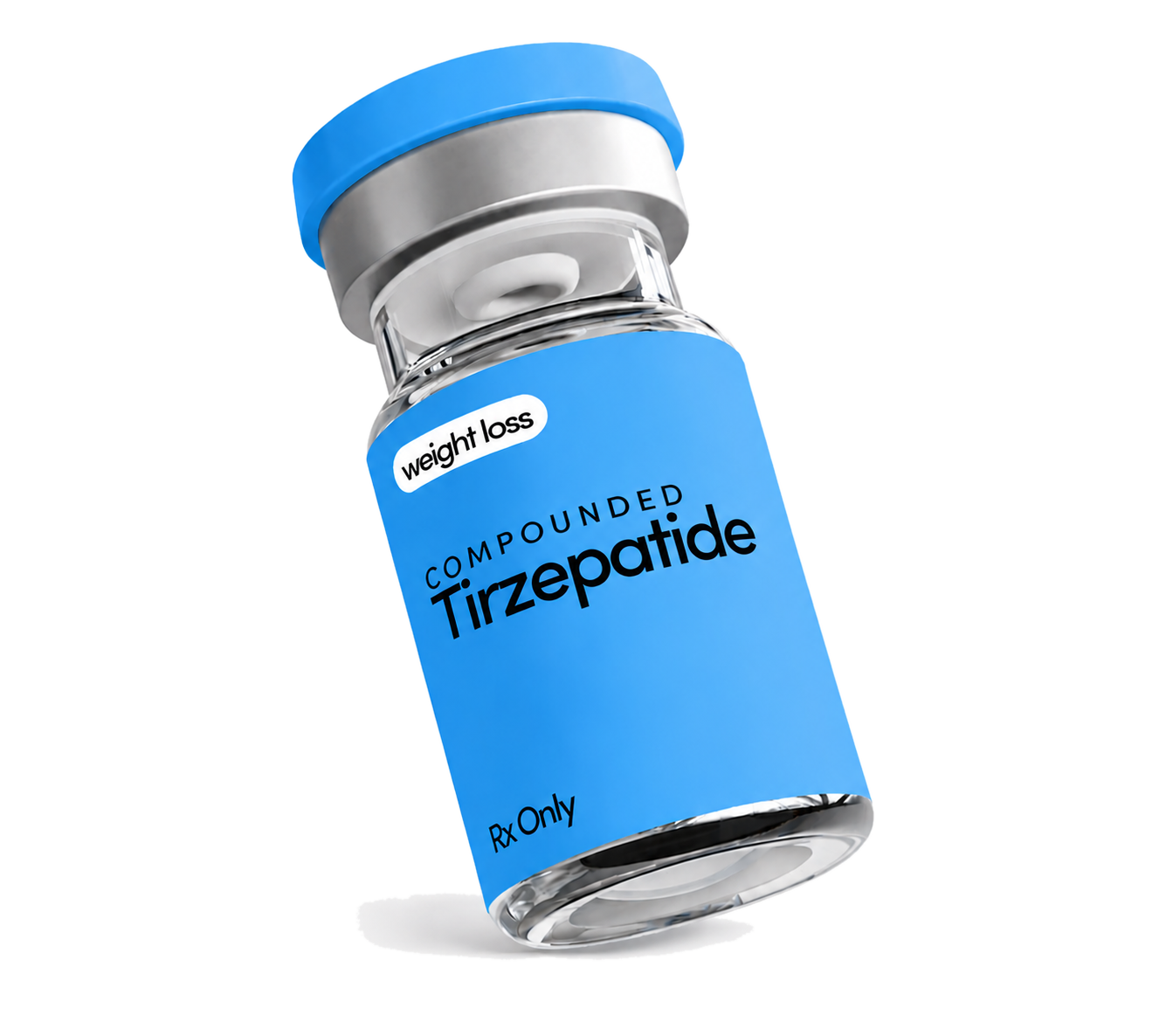
TirzepatideRx
Dual GLP-1 + GIP Receptor Agonist
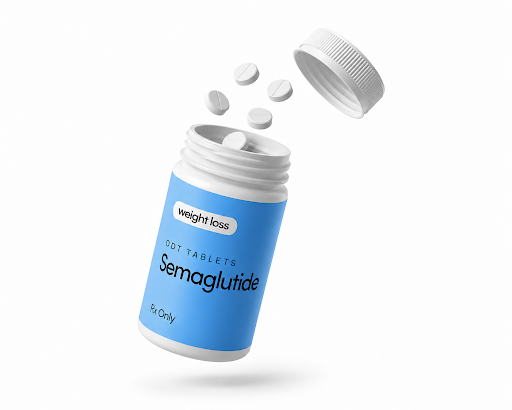
Semaglutide ODT PillsRx
GLP-1 Receptor Agonist - Oral Dissolving Tablet
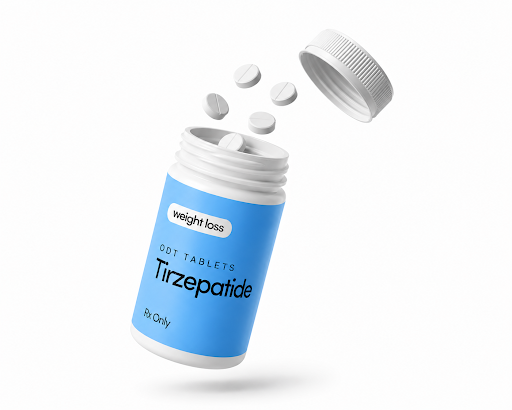
Tirzepatide ODT PillsRx
Dual GLP-1 + GIP Receptor Agonist - Oral Dissolving Tablet
Men's Complete Hair Growth PillRx
Minoxidil, Finasteride, Biotin

Men's Advanced Hair SprayRx
Minoxidil, Finasteride, Fluocinolone, Tretinoin

Women's Premium Hair SprayRx
Minoxidil, Tretinoin, Fluocinolone, Biotin, Melatonin
Women's Complete Hair Growth PillRx
Minoxidil, Vitamin E, Biotin
Written by Luma Meds Team
July 12, 2026 · 11 min read

Can you safely get semaglutide online — or are you taking a gamble every time you click “checkout”?
The answer is:
Yes, semaglutide can be prescribed through telehealth — but where you get it matters.
Online healthcare has made weight-loss treatment far more convenient. You can complete an intake from home. A licensed healthcare provider can review your information. And, when treatment is medically appropriate, a prescription can be sent to a pharmacy.
That convenience is one of the biggest advantages of telehealth. But it has also created a new problem: not every website offering semaglutide is operating the same way.
Some are legitimate telehealth providers. Others may skip proper medical screening, make misleading claims, obscure where medications come from, or even sell products without a valid prescription.
So before you trust a website with your health — and your credit card — here's what to look for.
This is probably the easiest red flag to spot.
You shouldn't be able to legally buy prescription semaglutide like you're ordering a bottle of vitamins.
A legitimate process should involve a licensed healthcare provider evaluating whether the medication is appropriate for you. That evaluation may include questions about:
The exact evaluation can vary. But there should be an evaluation.
The FDA specifically lists telehealth companies that do not require screening and a prescription from a licensed doctor as a consumer warning sign.
Pro Tip
Pro Tip
If a website asks for your credit card before it asks anything meaningful about your health, pay attention.
Medication should follow medical evaluation — not the other way around.
This one should make you stop immediately.
Semaglutide is not an over-the-counter medication.
If a website is offering to ship prescription semaglutide without any clinician review or prescription, that's not simply “convenient.” That's a major warning sign.
The FDA advises consumers to use online pharmacies that require a valid prescription and are appropriately licensed. A proper telehealth program should look more like:
That's healthcare. Simply clicking “Buy Semaglutide Now” isn't.
You should know who's dispensing your prescription. Period.
A trustworthy telehealth company should be transparent about the fact that prescriptions are fulfilled through a licensed pharmacy or, when applicable, a qualified compounding pharmacy. The pharmacy name should also appear on the medication label when you receive it.
The FDA has warned consumers to be cautious when:
Did You Know?
Did You Know?
The FDA has specifically warned telehealth companies not to market compounded medications in a way that falsely implies the telehealth company itself manufactured or compounded the drug.
That's why pharmacy transparency matters. You should know the difference between the telehealth company providing your care and the pharmacy actually dispensing your medication.
This is a big one.
Compounded semaglutide is not “generic Ozempic” or “generic Wegovy.”
A generic medication must go through an FDA approval process. A compounded medication does not. The FDA has specifically warned telehealth companies against describing compounded semaglutide as:
That doesn't mean compounded medications have no place in healthcare. It means the provider should be honest about what you're receiving.
The trustworthy version sounds like:
“This is a compounded medication and is not FDA approved.”
Not: “It's basically Ozempic, just cheaper.”
Transparency is a good sign.
There are currently FDA-approved semaglutide products including:
These products have been reviewed by the FDA for their approved indications.
Compounded semaglutide is different.
Compounded drugs are not reviewed and approved by the FDA for safety, effectiveness, or quality before they're marketed. That makes it especially important to understand what you're receiving and why a compounded option is being prescribed.
A reputable provider shouldn't hide this distinction. They should explain it.
Everyone loves a good deal.
But prescription medication is one area where “cheapest possible” shouldn't be your only deciding factor.
The FDA specifically tells consumers to be cautious about telehealth companies offering medications at deep discounts or prices that seem too good to be true. Why? Because a legitimate telehealth program isn't only paying for medication. There may also be:
A dramatically cheap product isn't automatically unsafe. But if the pricing makes you wonder how they're providing any actual healthcare around the medication, that's worth investigating.
Sometimes you're not just paying for what's in the vial. You're paying for the system around it.
Medical Weight Loss
Complete a short online health intake. A licensed healthcare provider reviews your information and, if treatment is appropriate, sends your prescription to a U.S. pharmacy — with clear dosing instructions and ongoing support.
Start your online visitImagine your medication arrives and you have a question.
Maybe you're nauseated. Maybe you're not sure how much to inject. Maybe you accidentally took the wrong dose. Maybe you don't know whether you should increase your dose next month.
Who do you contact?
If the answer is “I have no idea” — that's a problem.
A legitimate telehealth provider should give you a way to contact a qualified healthcare professional when you have treatment-related questions. The FDA specifically identifies companies that do not have a licensed doctor available to answer questions after medication is received as a warning sign.
Because getting a prescription isn't the end of treatment. It's the beginning.
This deserves its own section because the FDA has received reports of serious dosing errors involving compounded injectable semaglutide.
In some cases, patients accidentally administered five to 20 times their intended dose because of confusion involving:
Some patients required medical attention or hospitalization.
That's why legitimate treatment should include clear instructions explaining exactly how much medication to use and exactly how to measure it. You shouldn't have to search Reddit or watch a random TikTok to figure out how to inject your prescription.
Pro Tip
Pro Tip
When your semaglutide arrives, you should understand:
Your prescribed dose · how much to draw into the syringe · how often to take it · when your dose may change · what to do if you miss a dose · who to contact if you're confused.
If those answers aren't clear, ask before injecting.
This is a more technical red flag — but an important one.
The FDA has raised concerns about compounders using salt forms of semaglutide, including semaglutide sodium and semaglutide acetate.
These are chemically different active ingredients from the semaglutide base used in FDA-approved semaglutide medications. The FDA states that it does not have information showing these salt forms have the same chemical and pharmacologic properties, and says it is not aware of a lawful basis for their use in compounding under the applicable federal conditions.
You don't need to become a chemist. Just remember:
“Semaglutide” and “semaglutide sodium” aren't automatically the same thing.
If you're unsure what's in your medication, ask the provider or dispensing pharmacy.
Unfortunately, counterfeit GLP-1 medications are real.
The FDA has documented counterfeit Ozempic entering the U.S. drug supply chain, including products seized as recently as 2025. That's another reason buying medication from unknown websites, social-media sellers, or unofficial marketplaces can be risky.
Potential warning signs include:
The safest approach is to receive prescription medication through established healthcare and pharmacy channels.
Here's the simple checklist.
| What to look for | Why it matters |
|---|---|
| Medical intake before treatment | Helps determine whether semaglutide is appropriate |
| Licensed healthcare provider review | Prescription treatment should involve clinical oversight |
| Prescription required | Semaglutide isn't an OTC medication |
| Transparent pharmacy sourcing | You should know who's dispensing your medication |
| Clear disclosure if medication is compounded | Compounded drugs aren't FDA approved |
| Specific dosing instructions | Helps reduce potentially dangerous medication errors |
| Access to healthcare support | Questions and side effects don't stop after checkout |
| Realistic claims | Legitimate providers shouldn't promise guaranteed weight loss |
| Secure, professional process | You're receiving healthcare, not buying a mystery product |
If a company checks those boxes, that's a very different experience from simply “buying semaglutide online.”
A good telehealth program shouldn't become silent the second your payment goes through.
Once you're prescribed semaglutide, you should know what happens next. That may include:
Weight-loss medication usually involves titration, meaning the dose may gradually change over time. That process should be guided — not improvised.
Be cautious, too, with companies promising things like “Lose 30 pounds guaranteed.” GLP-1 medications can be highly effective for appropriate patients, but individual results vary based on dose, starting weight, nutrition, activity, treatment duration, adherence, health conditions, and individual response. No legitimate provider can guarantee exactly how much weight every patient will lose.
At Luma Meds, weight-management treatment begins with a medical intake and provider review — not simply a medication purchase.
A licensed healthcare provider reviews your health information and determines whether treatment is appropriate. When prescribed, medication is fulfilled through a U.S.-based pharmacy, with treatment instructions and access to healthcare support.
And when compounded medication is offered, it should be clearly identified as compounded and not FDA approved.
Because patients shouldn't have to guess:
Convenience is important. But convenience should never come at the expense of clarity and medical oversight.
Yes, semaglutide can be prescribed safely through telehealth. But don't confuse getting healthcare online with buying medication from a website.
A legitimate telehealth provider should require an appropriate medical evaluation, involve a licensed healthcare professional, issue a prescription when medically appropriate, use legitimate pharmacy channels, provide clear medication instructions, and remain available when patients have questions.
Watch out for providers that:
Because when it comes to semaglutide, the safest question isn't “Where can I get it cheapest?”
It's: “Who do I trust to manage my treatment?”
And that's a much better place to start.
This article is for educational purposes only and is not intended to provide medical advice, diagnosis, or treatment. Individual treatment decisions should be made with a licensed healthcare provider.
Share this article