Best Value
from$99/mo
SemaglutideRx
GLP-1 Receptor Agonist
SemaglutideRx
GLP-1 Receptor Agonist
TirzepatideRx
Dual GLP-1 + GIP Receptor Agonist
Semaglutide ODT PillsRx
GLP-1 Receptor Agonist - Oral Dissolving Tablet
Tirzepatide ODT PillsRx
Dual GLP-1 + GIP Receptor Agonist - Oral Dissolving Tablet
Men's Complete Hair Growth PillRx
Minoxidil, Finasteride, Biotin

Men's Advanced Hair SprayRx
Minoxidil, Finasteride, Fluocinolone, Tretinoin

Women's Premium Hair SprayRx
Minoxidil, Tretinoin, Fluocinolone, Biotin, Melatonin

Women's Complete Hair Growth PillRx
Minoxidil, Vitamin E, Biotin
Written by Luma Meds Team
August 12, 2026 · 10 min read
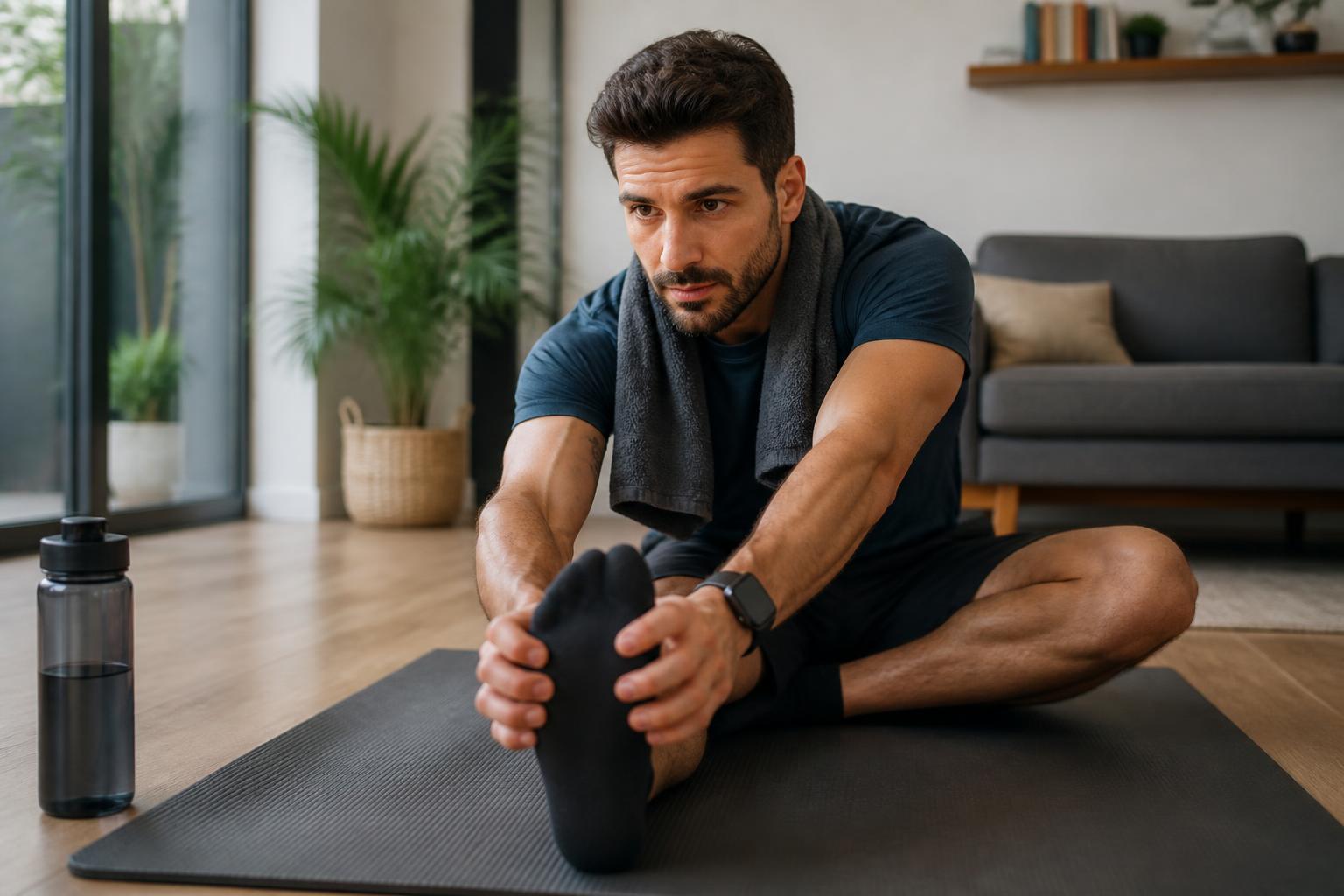
Recovery is a major part of athletic performance.
Training places stress on muscles, depletes energy stores, and creates metabolic demands that the body has to recover from before the next workout.
That's one reason NAD+ has attracted attention in fitness and wellness.
NAD+ is involved in cellular energy production, mitochondrial function, and several processes related to how cells respond to metabolic stress.
But does that mean increasing NAD+ can actually help you recover faster after exercise?
The science is promising — but there's an important difference between understanding what NAD+ does inside the body and proving that NAD+ treatment improves athletic recovery.
NAD+ stands for nicotinamide adenine dinucleotide.
It's a molecule found in virtually every cell in the body.
NAD+ participates in hundreds of biological reactions and is particularly important for converting nutrients into usable cellular energy.
One of its major roles involves helping transfer electrons during metabolic reactions that ultimately contribute to the production of ATP.
ATP is the primary energy currency used by cells.
That makes NAD+ especially relevant to tissues with high energy demands — including skeletal muscle.
Your muscles require enormous amounts of energy during physical activity.
Whether you're lifting weights, running, cycling, or participating in sports, muscle cells continually need to regenerate ATP.
NAD+ participates in several pathways involved in this process, including:
NAD+ also exists in balance with its reduced form, NADH. Together, NAD+ and NADH help move electrons through metabolic pathways that allow cells to produce energy.
This doesn't mean NAD+ itself is an instant energy source. Instead, it's part of the machinery your cells use to produce energy.
Exercise creates significant metabolic demand.
During physical activity, skeletal muscle changes how it produces and uses energy, including shifts in NAD+-dependent metabolism.
Interestingly, exercise itself may also influence pathways involved in NAD+ production and recycling.
Research has found that physical activity can affect enzymes involved in NAD+ metabolism and activate signaling pathways associated with mitochondrial adaptation.
In other words, the relationship works both ways:
NAD+ helps support exercise metabolism, while exercise may help influence the body's NAD+ system.
Mitochondria are often called the powerhouses of the cell because they produce much of the ATP used for cellular energy.
NAD+ is essential for normal mitochondrial energy production.
It also serves as a substrate for enzymes involved in cellular signaling, including sirtuins.
Sirtuins have been studied for their roles in:
Exercise activates many of these same pathways.
This overlap is one reason researchers have become interested in whether manipulating NAD+ metabolism could influence exercise capacity or recovery.
This is where the evidence becomes more limited.
There is strong biological evidence that normal NAD+ metabolism is essential for muscle function and cellular energy production.
However, that isn't the same as proving that supplemental or injected NAD+ makes athletes recover faster.
Most research involving NAD+ and exercise has focused on:
Direct clinical trials evaluating NAD+ injections specifically for post-workout recovery remain limited.
Where the evidence stands
Where the evidence stands
It's reasonable to say that NAD+ has a biological connection to muscle energy metabolism. It's not yet reasonable to promise that an NAD+ injection will eliminate soreness or dramatically shorten recovery time.
Some of the most interesting human research has involved compounds the body can use to produce NAD+, particularly nicotinamide riboside (NR) and nicotinamide mononucleotide (NMN).
Studies have shown that certain NAD+ precursors can increase NAD+-related metabolites in humans. Researchers have therefore investigated whether increasing NAD+ availability could influence muscle function, metabolism, and exercise performance.
Results have been mixed.
Some studies have reported changes in aerobic capacity or metabolic markers, while others haven't found meaningful improvements in strength, endurance, or physical performance.
This is an important reminder that raising an NAD+-related biomarker doesn't automatically translate into better athletic performance.
After strenuous exercise, muscle tissue undergoes a recovery and adaptation process. That process involves:
Because NAD+ participates in energy metabolism and cellular stress-response pathways, researchers are interested in how NAD+ availability might influence these processes.
But recovery is complicated. NAD+ is only one piece of a much larger biological system.
There isn't currently strong clinical evidence showing that NAD+ treatment reliably prevents or eliminates delayed-onset muscle soreness (DOMS).
Muscle soreness after unfamiliar or strenuous exercise is influenced by local muscle damage, inflammation, training intensity, and adaptation.
Someone may personally feel different after NAD+ treatment, but individual experiences shouldn't be confused with evidence that NAD+ has been proven to treat exercise-induced soreness.
NAD+ is necessary for normal physical performance because your muscles couldn't efficiently produce energy without it.
But having a molecule involved in energy metabolism doesn't necessarily mean that taking more of it makes a healthy athlete faster or stronger.
Human studies involving NAD+ precursors have produced inconsistent performance results. Some research involving NMN supplementation has suggested improvements in certain measures of aerobic capacity, while other trials haven't demonstrated significant improvements in muscle strength or mitochondrial function despite changing NAD+-related metabolites.
More research is needed to determine whether increasing NAD+ availability produces meaningful performance benefits in healthy athletes.
Even if NAD+ metabolism ultimately proves useful for athletic recovery, it doesn't replace the fundamentals. The biggest drivers of recovery still include:
Sleep. Sleep supports muscle repair, hormonal regulation, nervous-system recovery, and overall athletic performance.
Protein. Adequate dietary protein provides the amino acids needed to repair and build muscle tissue.
Carbohydrates. Carbohydrates help replenish muscle glycogen used during training, particularly after prolonged or high-intensity exercise.
Hydration. Fluid and electrolyte replacement becomes especially important after intense exercise or heavy sweating.
Rest and training management. More training isn't always better. Adequate recovery time allows the body to adapt to the stress created by exercise.
NAD+ should never be viewed as a shortcut around these fundamentals.
Wellness
Complete a quick online visit and a licensed provider can review your wellness and performance goals to determine whether NAD+ treatment may be appropriate for you.
Start your wellness visitInterest in NAD+ isn't limited to competitive athletes.
People exploring NAD+ treatments may include those focused on:
However, someone's goals don't automatically mean NAD+ treatment is appropriate. Health history, medications, symptoms, and treatment expectations should be reviewed with a healthcare provider.
NAD+ research becomes particularly interesting in the context of aging.
Studies suggest that NAD+ metabolism can change with age, while aging is also associated with changes in mitochondrial function, muscle mass, exercise capacity, recovery, and metabolic health.
This has led researchers to investigate NAD+-related interventions as potential ways to support aspects of healthy aging.
But again, maintaining muscle and physical function with age still depends heavily on proven strategies such as resistance training, adequate protein, cardiovascular activity, and sufficient recovery.
NAD+ research should be viewed as an emerging addition to that conversation — not a replacement for it.
NAD+ plays an essential role in cellular energy production, mitochondrial function, and skeletal muscle metabolism.
Those biological roles make NAD+ an interesting area of research for exercise, physical performance, and athletic recovery.
However, there's an important distinction between NAD+ being necessary for muscle metabolism and NAD+ treatment being clinically proven to accelerate recovery.
Human research on NAD+ precursors has shown that NAD+ metabolism can be influenced, but studies examining actual improvements in exercise performance and muscle function have produced mixed results. Direct evidence specifically demonstrating that NAD+ injections improve athletic recovery remains limited.
For now, NAD+ is best viewed as an emerging area of exercise and metabolic research, while sleep, nutrition, hydration, appropriate training, and recovery remain the foundation of athletic performance.
At Luma Meds, eligible patients can discuss their wellness and performance goals with a licensed healthcare provider to determine whether an available NAD+ treatment option may be appropriate for their individual needs.
Wellness
Complete a quick online visit and a licensed provider can review your goals and health history to determine whether NAD+ treatment may be appropriate for you.
Start your wellness visitThis article is for educational purposes only and is not a substitute for professional medical advice. Prescription treatment requires evaluation and approval by a licensed healthcare provider when applicable. NAD+ treatments have not been established as treatments for improving athletic performance or exercise recovery. Individual results vary.
This article is for educational purposes only and is not intended to provide medical advice, diagnosis, or treatment. Individual treatment decisions should be made with a licensed healthcare provider.
Share this article