GLP-1 Option
from$99/mo
SemaglutideRx
GLP-1 Receptor Agonist
SemaglutideRx
GLP-1 Receptor Agonist
TirzepatideRx
Dual GLP-1 + GIP Receptor Agonist

Semaglutide ODT PillsRx
GLP-1 Receptor Agonist - Oral Dissolving Tablet
Tirzepatide ODT PillsRx
Dual GLP-1 + GIP Receptor Agonist - Oral Dissolving Tablet

Men's Complete Hair Growth PillRx
Minoxidil, Finasteride, Biotin

Men's Advanced Hair SprayRx
Minoxidil, Finasteride, Fluocinolone, Tretinoin

Women's Premium Hair SprayRx
Minoxidil, Tretinoin, Fluocinolone, Biotin, Melatonin

Women's Complete Hair Growth PillRx
Minoxidil, Vitamin E, Biotin
Written by Luma Meds Team
August 25, 2026 · 11 min read

Methionine frequently appears in lipotropic injections, including formulations commonly called MIC or Lipo-B injections. It is often described as an ingredient that helps the body “burn fat.”
But that is an oversimplification.
Methionine participates in important pathways involving the liver, methylation, proteins, and fats. That does not mean taking additional methionine automatically causes stored body fat to disappear.
The distinction that matters
The distinction that matters
Methionine is an essential amino acid. “Essential” means the body cannot make enough on its own, so it must come from the diet.
Dietary sources include:
Methionine is more than a building block for protein. It also serves as the starting point for several biochemical pathways throughout the body.
Methionine contributes to processes involving:
One of its central roles begins when methionine is converted into S-adenosylmethionine, usually abbreviated SAM or SAMe. SAM donates methyl groups in many reactions that influence DNA regulation, neurotransmitter metabolism, and phospholipid processing.
The connection between methionine and fat metabolism is primarily biochemical. Through the methionine cycle, it interacts with pathways involving choline, folate, vitamin B12, and vitamin B6.
These interconnected pathways help support methylation and the normal handling of lipids. That is one reason methionine became associated with the term lipotropic.
The word lipotropic refers to compounds involved in the metabolism, processing, or transport of fats. Common ingredients described as lipotropic agents include methionine, inositol, and choline—together often called MIC.
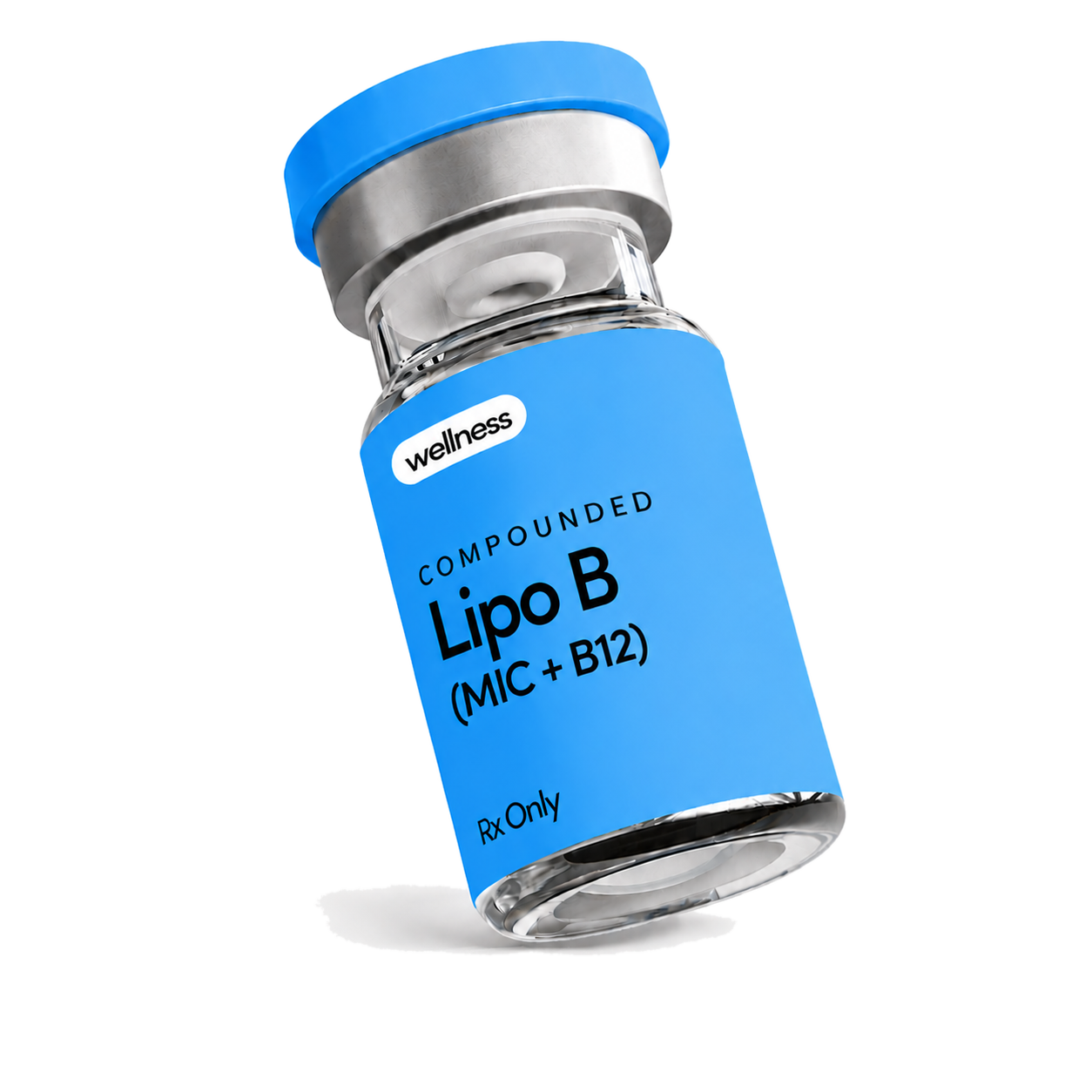
Some injectable formulations combine MIC with vitamin B12 or other nutrients and are commonly marketed as Lipo-B injections.
Lipotropic does not automatically mean fat-burning
Lipotropic does not automatically mean fat-burning
The liver helps process fatty acids, triglycerides, cholesterol, and lipoproteins. Methionine metabolism connects with the production of compounds involved in these processes.
For example, SAM can donate methyl groups in the synthesis of phosphatidylcholine, an important component of cell membranes and lipoproteins. Phosphatidylcholine contributes to the packaging and transport of triglycerides from the liver.
Choline can be converted into phosphatidylcholine. Phosphatidylcholine is needed for the formation and secretion of very-low-density lipoproteins, or VLDL, which transport triglycerides from the liver to other tissues.
Methionine contributes to an alternate phosphatidylcholine-synthesis pathway by supplying methyl groups through SAM. This is a legitimate relationship with lipid handling—but it is still not the same as directly burning stored body fat.
A simplified view of the pathway is:
| Step | What happens |
|---|---|
| Methionine → SAM | Methionine is activated to form the major methyl donor SAM. |
| SAM → SAH | SAM donates a methyl group and becomes S-adenosylhomocysteine, or SAH. |
| SAH → Homocysteine | SAH is converted through the cycle to homocysteine. |
| Remethylation | With nutrients including folate and vitamin B12, homocysteine can be recycled to methionine. |
| Transsulfuration | With vitamin B6-dependent steps, homocysteine can move toward cysteine production. |
This cycle connects methylation, sulfur metabolism, and antioxidant biology. It also shows why describing methionine as having one simple function is misleading.
Glutathione is a major intracellular antioxidant made from glutamate, cysteine, and glycine. Methionine is not directly one of those three ingredients.
However, methionine metabolism can contribute to cysteine production through the transsulfuration pathway. Because cysteine availability can constrain glutathione synthesis, methionine is connected to this antioxidant system indirectly.
There is an important distinction between fat metabolism and fat loss. The body is continuously storing fat, releasing fatty acids, oxidizing fatty acids, transporting lipids, and synthesizing lipids.
Methionine participates in pathways connected with some of those processes. But meaningful body-fat loss over time depends on a much broader system, including energy intake, energy expenditure, appetite, hormones, physical activity, genetics, and metabolic health.
Strong clinical evidence that supplemental methionine by itself causes substantial weight loss in otherwise adequately nourished people is lacking.
Methionine is metabolically important, but taking more does not necessarily produce a meaningful increase in resting metabolic rate. If a person already gets adequate methionine from food, additional methionine does not automatically make the body burn dramatically more calories.
Metabolism is tightly regulated
Metabolism is tightly regulated
Not in the way that phrase is often interpreted. Methionine participates in normal liver lipid handling, but it does not form a barrier that prevents excess energy from being stored.
When energy intake consistently exceeds energy use, the body can still store energy. When energy intake remains below energy needs, stored energy—including body fat—can be used. Methionine does not override that physiology.
Methionine is commonly paired with inositol and choline because all three have biological roles connected with cellular function or lipid metabolism. The combination is abbreviated MIC:
Some formulations add vitamin B12 or other nutrients. These injections provide compounds involved in normal metabolic pathways, but high-quality clinical evidence that MIC injections alone produce substantial weight loss is limited.
Daily wellness
Complete a short online visit. A licensed healthcare provider can review your goals and health history and determine whether an available option may be appropriate. If prescribed, treatment is fulfilled by a registered pharmacy.
Start your Lipo-B visitMethionine and GLP-1-based medications work very differently.
| Methionine | GLP-1-based medications | |
|---|---|---|
| What it is | An essential amino acid | Prescription medications acting on hormone receptors |
| Primary role | Protein synthesis and interconnected metabolic pathways | Appetite, satiety, food intake, and glucose regulation |
| Weight-loss evidence | No strong evidence for substantial loss by itself | Large randomized trials show substantial average weight reduction in appropriate patients |
| Equivalent approaches? | No | No—these should not be compared as substitutes |
Semaglutide acts through GLP-1 receptors. Tirzepatide acts through both GIP and GLP-1 receptors. Methionine does not act through either receptor and should not be presented as an equivalent weight-loss treatment.
Methionine-containing injections may be offered as part of broader wellness or weight-management programs. They should not replace the fundamentals that influence long-term body composition, including appropriate nutrition, adequate protein, physical activity, resistance training, sleep, a sustainable energy intake, and medical treatment when appropriate.
No single amino acid can compensate for an overall treatment plan that is not meeting a patient's needs.
No. Essential does not mean unlimited amounts are beneficial.
The body regulates methionine through interconnected pathways involving SAM, homocysteine, cysteine, folate, vitamin B12, vitamin B6, and other nutrients. The goal is adequate nutrition and appropriate use—not maximizing methionine exposure.
Homocysteine is produced during methionine metabolism. It can be recycled or metabolized through pathways involving folate, vitamin B12, and vitamin B6.
Elevated blood homocysteine has been associated with cardiovascular and other health risks, but the relationship is complex. Trials that lowered homocysteine with B vitamins have not consistently shown fewer cardiovascular events. This is another reason methionine should not be reduced to a simple “fat-burning amino acid” story.
Most people consuming adequate dietary protein receive methionine through food. Animal proteins tend to be rich sources, although many plant foods contain methionine too.
Intake varies with total calorie and protein intake, dietary pattern, food restrictions, and medical conditions. People following very restrictive diets may have different nutritional considerations and can discuss them with a qualified healthcare professional.
Methionine-containing injections should not be expected to produce dramatic weight loss on their own. Methionine has legitimate roles in metabolism, but strong clinical evidence that injections containing methionine independently produce the magnitude of weight loss seen with established obesity treatments is lacking.
Biological plausibility is not clinical proof
Biological plausibility is not clinical proof
Instead of thinking:
The oversimplified claim
The oversimplified claim
A more accurate framework is:
What the biology supports
What the biology supports
Actual body-fat reduction depends on a much larger system. Methionine is one participant in that system, not an on/off switch for fat loss.
Methionine is an essential amino acid with important roles in protein synthesis, SAM production, methylation, sulfur metabolism, glutathione-related pathways, and normal liver lipid processing.
Its involvement in lipid metabolism is one reason it is commonly included in MIC and Lipo-B injections. But “fat metabolism” should not be confused with “fat burning.” Current evidence does not show that methionine alone causes substantial body-fat loss.
At Luma Meds, eligible patients can discuss their goals and available wellness or weight-management options with a licensed healthcare provider. When treatment is prescribed, registered pharmacies—not Luma Meds—prepare and dispense it.
Luma Meds
A licensed healthcare provider can review your health history, goals, and available options to determine whether a wellness treatment may be appropriate for you.
Start your online visitThis article is for educational purposes only and is not intended to provide medical advice, diagnosis, or treatment. Individual treatment decisions should be made with a licensed healthcare provider.
Share this article